
ELTON runs AI discovery across the full stack, proves exploitability, and writes the FDA evidence for every dismissal. We run it. You get the platform and the hardware. Built for products that can't fail.
Trusted by 6 of the top 10 medical device manufacturers, ELTON protects over $1 trillion in market cap


One vulnerability away from a recall. AI made vulnerability discovery cheap. Every SBOM refresh, scanner run, and researcher email adds to a pile your team clears by hand. The pile outgrows any headcount plan, and the FDA questions everything you didn't get to or didn't fix.
Premarket and postmarket regular testing and management of every vulnerability.
AI vulnerability discovery is here. Your spreadsheets won’t keep up. ELTON finds and manages.
Senior engineers burn quarters proving CVEs don't apply to your device. That work ships nothing.
But every dismissal needs evidence. FDA reviewers probe the findings you didn't fix, not the ones you did.
Consultants bill by the hour. AI doesn't have one. So we test all year, every build, and the price never moves.
AI surfaces vulnerabilities faster than any legacy pentest can work through them. ELTON runs continuously, every build, no surprises.
A consultant sells you a snapshot. ELTON tests all year on one subscription. Same evidence FDA expects, at a quarter of the spend.
Basis of claim: median time-to-findings of 4 weeks and a cost of approximately $100,000 for a consulting pentest, verified across 3 medical device cybersecurity consulting firms. ELTON delivers findings inside 2 days on covered devices.
A finding says something is wrong, rarely what to change. ELTON ships prescriptive remediation down to the code fix, delivered as a ticket or over ELTON MCP.
Prescriptive fixes for the exact line, delivered where your developers already work. Open a ticket, or run it closed-loop over ELTON MCP.
FDA expects hundreds of test cases, each traced from documentation to result. A point-in-time pentest cannot produce that. ELTON generates coverage and traceability as it tests. Submission-proof, audit-proof.

Every one of these traces to point-in-time testing and a lack of exploitability management. Across 1,000+ cybersecurity submissions we have watched deficiencies add months to ship dates, and in postmarket, a few end in recalls. ELTON closes them all and ships the knowledge with it: SOPs, templates, and submission language included, no consultants. The AI stays on the hard part, finding and managing the vulnerabilities.
The FDA will not accept a justification for leaving pentest findings unfixed.
USB, Wi-Fi, and Bluetooth each need evidenced verification, not a summary.
Section 524B requires postmarket monitoring and a plan, not just documentation.
The FDA wants all in-scope components and historical testing, not a subset.
A postmarket plan without annual third-party pentesting draws a deficiency.
High-level vendor advice and unproven mitigations do not close a finding.
ELTON is an exploitability management platform, delivered as a managed service. Our team runs discovery and verification against your device continuously. You get full platform access for your regulatory and security teams, and a TestLink™ appliance on your bench so your product teams can run tests themselves, any hour, any day.
A scanner or SBOM platform never touches your product. It cannot log in, probe an interface, or watch a payload fail. So it guesses, and it guesses wrong, because it simply does not know.
Version matching against someone else’s advisory. Every rating is a guess about a product it has never seen.
Not your whole fleet. A single product is enough to verify what is exploitable, dismiss what is not, and prove both.
ELTON models your product's architecture, then runs test cases from your lab or ours. Every finding is chained back to a root that is exploitable, changing vulnerabilities to weaknesses on-demand, so you disposition less.
Reachable on its own from the device's exposed attack surface. This is what earns the name vulnerability, and it goes to a developer now.
Reachable only through indirect access, when another vulnerability breaks first. Mapped to its root and watched, because fixing the root turns it inert.
No exploit path on this device today. Documented with the reasoning attached, and not called a vulnerability, because it is not one.
ELTON computes an attack graph over the digital twin. Entry vectors produce conditions, findings require them. Remediate a root and watch the conditional chain collapse along with your team's workload.
Genuinely exploitable from the entry vector on its own. These need a developer now.
Reachable only if something else breaks first. Monitored, not urgent. Fix the root and they go inert.
No path on this device. Dismissed with the reasoning attached, ready for regulatory review.
Tell us the device and the workload. We show you the graph: the handful to fix, and the evidence for everything else.
Every finding and every dismissal is evidenced for regulatory review. MDDT-recognized CVSS is produced as an output, not the headline. Proof leads.
Triage that never touches the device is guessing. ELTON reaches a physical unit three ways: our lab, a remote session into yours, or TestLink™ on your bench over out-of-band 5G.
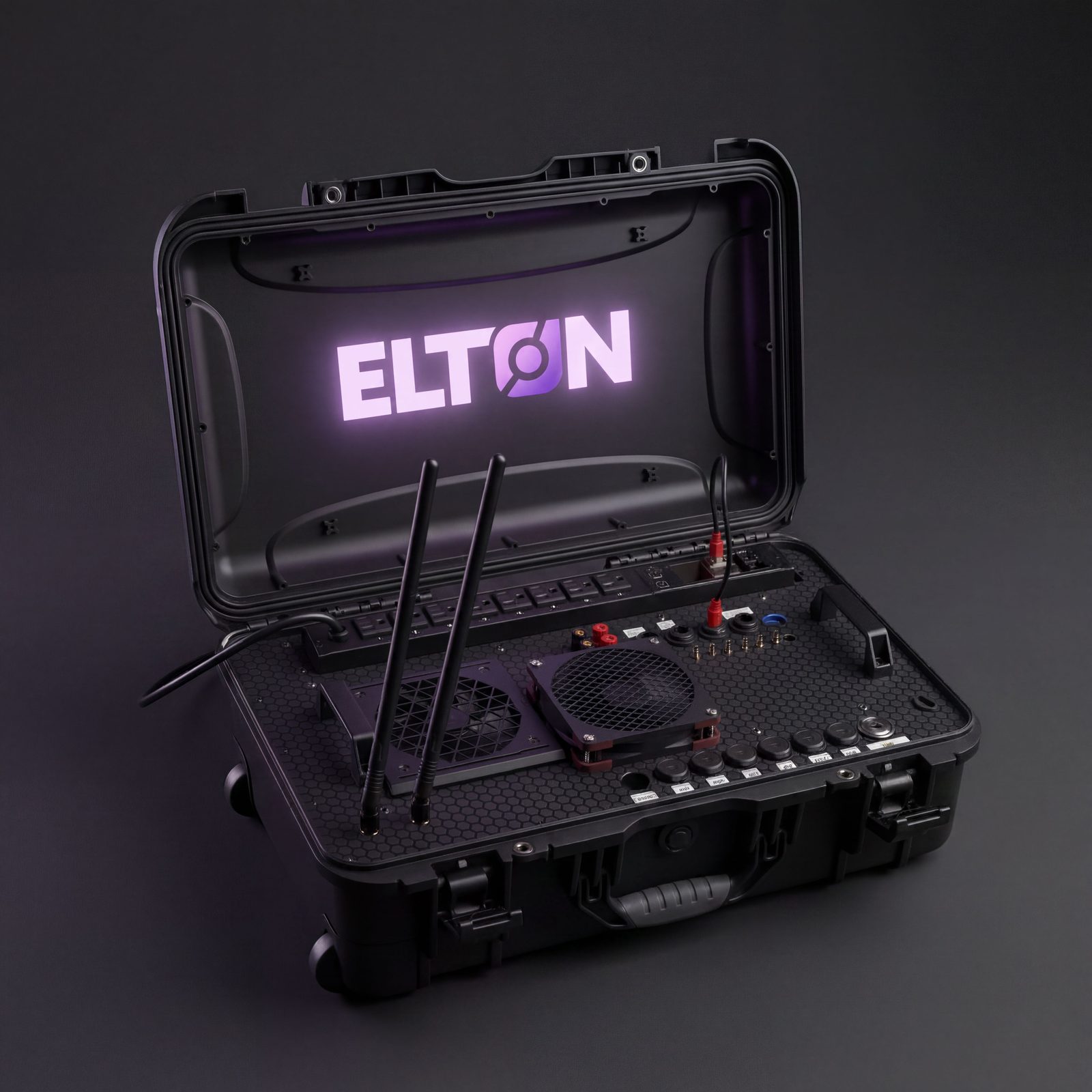
Every TestLink™ is a pentester in a box, run from one console over out-of-band 5G. Watch the fleet live: connections, sessions, latency. One bench to a deployment grid, no lab.
Enterprise vendors test one layer, mostly one surface. A medical device is a regulated system of systems: hardware, embedded, web, mobile, and network, and every decision faces regulatory review.
Submission artifacts map to what FDA actually reviews: CycloneDX SBOMs, the threat model, vulnerability assessments rated with the FDA-qualified MDDT rubric, and testing evidence with narrative, structured for eSTAR's cybersecurity sections and §524B(b). The same format has carried hundreds of 510(k) and PMA submissions.
Every vulnerability keeps its history on the record: identification, triage, rating changes, and the release that fixed it, in a CISA VEX aligned lifecycle with enforced status transitions and required reasons. MTTR and time-to-patch metrics follow FDA postmarket guidance, and any slice exports as an audit-ready report.
Built by the team behind 1,000+ FDA submissions. Trusted by 6 of the top 10 medical device manufacturers.
“The vulnerabilities reported to us today by third parties are AI slop. ELTON helps us automate why they don't matter, it's the only method that has held up to FDA audit.”
“We have done many FDA submissions with ELTON's data and had not a single deficiency, we test early and often with AI.”
“We use ELTON's subscription testing services and it has changed how our organization views cybersecurity testing, it's flexible, fast, and better.”
“We swapped an annual pentest for continuous coverage. Findings land while the release is still open, not months later.”
“Our regulatory team stopped assembling evidence by hand. The VEX and rationale come out of the platform ready to submit.”
“ELTON showed us the ten findings out of thousands that mattered, and proved the rest. That is the whole job.”
“The vulnerabilities reported to us today by third parties are AI slop. ELTON helps us automate why they don't matter, it's the only method that has held up to FDA audit.”
“We have done many FDA submissions with ELTON's data and had not a single deficiency, we test early and often with AI.”
“We use ELTON's subscription testing services and it has changed how our organization views cybersecurity testing, it's flexible, fast, and better.”
“We swapped an annual pentest for continuous coverage. Findings land while the release is still open, not months later.”
“Our regulatory team stopped assembling evidence by hand. The VEX and rationale come out of the platform ready to submit.”
“ELTON showed us the ten findings out of thousands that mattered, and proved the rest. That is the whole job.”
One issue a month on AI, exploitability, and FDA cybersecurity review. Read by product security and regulatory teams at 6 of the top 10 manufacturers.
Start with one device. We build the twin from documentation your quality system already produces, run AI discovery remotely, and show you the graph: the handful to fix, and the evidence for everything else.