
Since 2013 we have tested the devices other firms will not touch. Tested, cleared, and validated to the same standards our customers ship under.
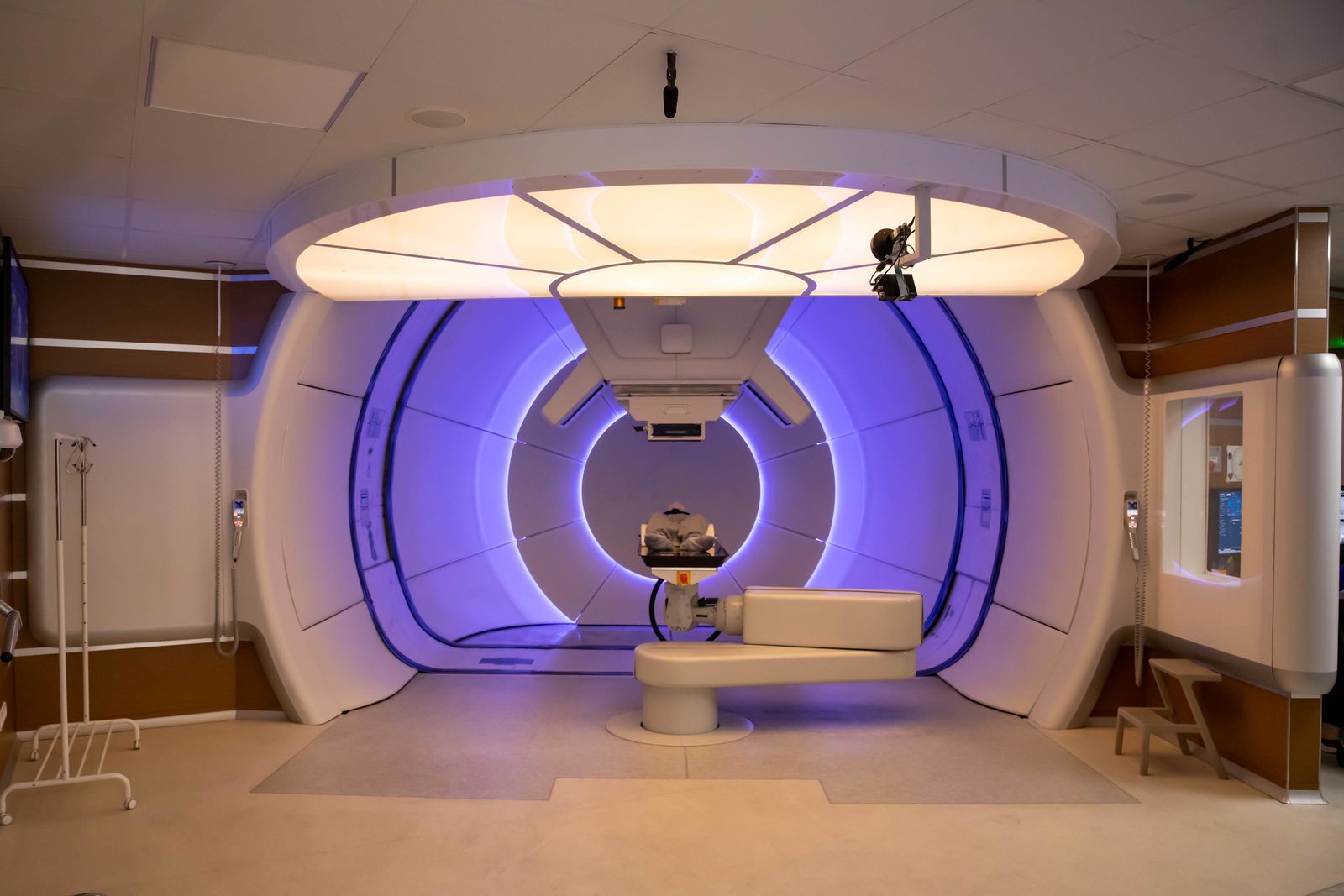
A proton therapy system is among the most dangerous devices in medicine. A multi-ton synchrotron accelerates protons to two-thirds the speed of light and steers the beam into a patient with millimeter precision. Software decides where that beam stops.
When the manufacturer needed the beam-delivery and safety-interlock stack tested, they called ELTON. We modeled the control chain, drove the real interfaces, and proved which findings could reach the beam and which could not. That is the bar we test to.
ELTON vulnerability ratings are qualified as an FDA non-clinical assessment tool. Deterministic, architecture-justified CVSS 4.0 ratings for cyber devices under FD&C Act § 524B(c), aligned to your device documentation.
Per vulnerability and per initial-access path, justified to the architecture.
Bit-for-bit identical output on identical graphs. No rater drift.
Ingest, transform, target, subgraph, score, explain. Every step traced.
Premarket submissions in the design evaluation phase.
Retrospective blinded comparison against the NVD baseline and independent third-party CVSS 4.0 raters, per vulnerability.
Repeated executions across version-controlled device documentation produced identical CVSS 4.0 vectors and scores.
A large drop in the time to evaluate hundreds of findings across SAST, DAST, SBOM, and penetration testing.
ELTON performs complex attack-surface analysis and defensibly rates vulnerabilities, often reducing a HIGH to a rating that fits the product. It is a validated solution, held to the same lifecycle rigor as a medical device.
| SRS Software Requirements Specification | v2.2 |
| SDS Software Design Specification (Core API) | v1.0 |
| SVP Design Verification Test Protocol | v1.1 |
| SVR Software Verification Report | v1.0 |
| RTM Requirements Traceability Matrix | v1.0 |
| RMF Software Risk Management File | v1.0 |
“The vulnerabilities reported to us today by third parties are AI slop. ELTON helps us automate why they don't matter, it's the only method that has held up to FDA audit.”
“We have done many FDA submissions with ELTON's data and had not a single deficiency, we test early and often with AI.”
“We use ELTON's subscription testing services and it has changed how our organization views cybersecurity testing, it's flexible, fast, and better.”
The credentials are the floor, not the pitch. Bring us your hardest device and we will show you the evidence.
More than 1,000 devices tested and cleared, across every major modality, with hundreds of thousands of vulnerabilities discovered, rated and dispositioned. ELTON has supported FDA submissions since 2013, and six of the top ten device manufacturers use it for testing.
ELTON vulnerability ratings are qualified as an FDA non-clinical assessment tool. The output is a deterministic, architecture-justified CVSS 4.0 rating, produced per vulnerability and per initial access path, for cyber devices under FD&C Act Section 524B(c) and aligned to your own device documentation.
Yes, to the same lifecycle rigor as a medical device. Validation recorded 460 of 460 test cases passed with zero failures, deviations or nonconformances, 182 requirements traced bidirectionally, and 23 of 23 hazards mitigated under ISO 14971 with residual risk acceptable. The package aligns to IEC 62304, ISO 13485, IEC 81001-5-1 and 21 CFR Part 11 and Part 820.
Bit-for-bit identical on identical graphs. Repeated executions across version-controlled device documentation produced the same CVSS 4.0 vectors and scores, so there is no rater drift. Each rating runs through a six stage property graph pipeline: ingest, transform, target, subgraph, score and explain, with every step traced.
A proton therapy system, among the most dangerous devices in medicine. A multi-ton synchrotron accelerates protons to two-thirds the speed of light and software decides where the beam stops. ELTON modeled the beam-delivery and safety-interlock control chain, drove the real interfaces, and proved which findings could reach the beam.